
New Qlevia Enterprise Edition is live on Microsoft Marketplace
Enterprise AI breaks when operational knowledge stays fragmented.
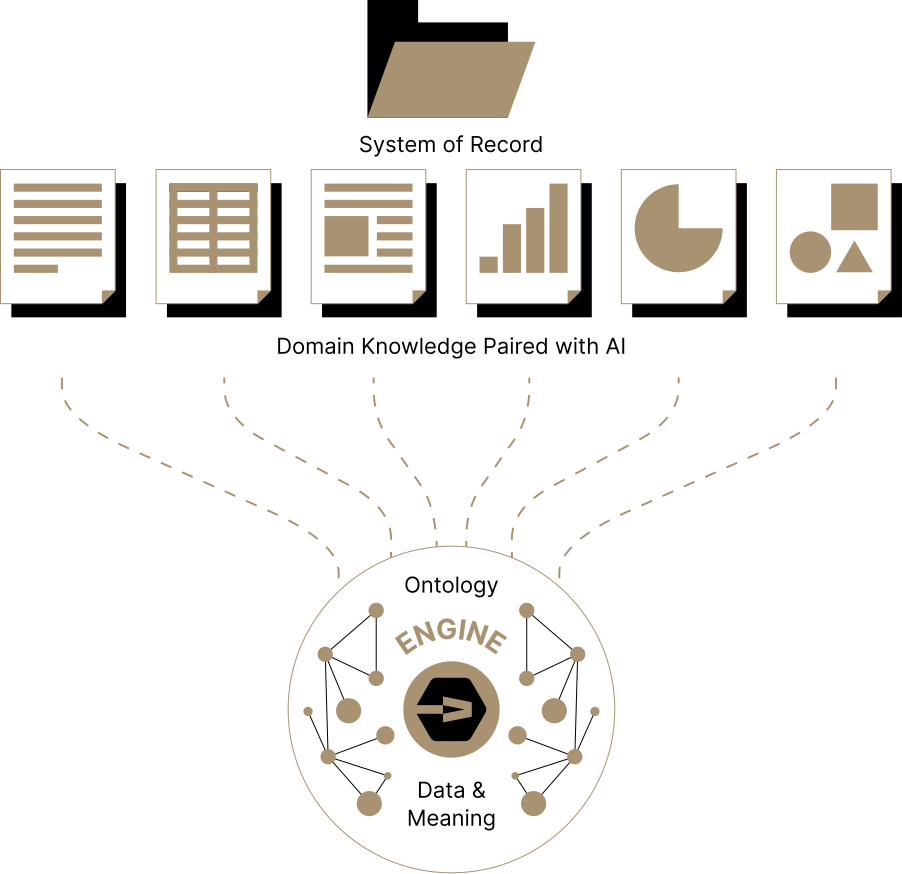
Qlevia is the semantic graph native layer between operational data and enterprise AI — turning fragmented systems into structured operational knowledge that AI can understand, reason over and act on.
Available today on Microsoft Marketplace as Qlevia Enterprise Edition — a managed knowledge graph platform built on the QLever graph engine and more than a decade of enterprise knowledge graph engineering.
Animated illustration: data flows from systems of record — ERP, CRM, documents and databases — into a unified knowledge graph, which agents, applications and people query and act on.
The Problem
Most enterprises already have data, tools, and AI pilots. Yet systems remain fragmented, context is buried across silos, and AI cannot reliably operate without a connected operational knowledge layer to reason over. This is why enterprise AI often looks promising in demos and underperforms in production.
Data Is Fragmented
Important facts are spread across systems that were never designed to work as one connected operational picture.
Context Gets Lost
Tables and pipelines move records, but they rarely preserve the meaning of relationships, rules, dependencies, and business exceptions.
AI Cannot Be Trusted
Without connected operational context, AI outputs are difficult to explain, audit, or operationalise in environments where decisions matter.
Our Approach
Why Qlevia
Probabilistic AI,
grounded in declarative facts.
Qlevia pairs the fluency of large language models with the precision and auditability of a knowledge graph — the best of both worlds.
Available Today
Qlevia Enterprise Edition is live on Microsoft Marketplace, with a growing catalogue of managed data services alongside it.
Live on Microsoft Marketplace
Qlevia Enterprise Edition
A managed RDF and knowledge graph platform on Azure, built on the QLever graph engine. Deterministic reasoning, open standards, and enterprise operations — delivered as a managed service in your Azure environment.
Data-as-a-Service
Managed knowledge graph access to major public datasets — production-ready, without running the infrastructure yourself.
Where It Matters
Qlevia is relevant wherever organisations need to understand complex operational reality rather than just report on disconnected data.
Typical starting points include:
Knowledge Graphs and Semantic Search
Connect information across systems, documents and data sources to support enterprise search, discovery and contextual retrieval.
Risk and Fraud
Link entities, events and transactions to surface hidden relationships, with decision paths that auditors and investigators can review.
Compliance and Controls
Connect policies, systems and operational evidence into a single structure that supports reporting, oversight and audit trails.
Operational Intelligence
Track dependencies across assets, teams, processes and events to support day-to-day decisions in fast-changing environments.
Public Sector and Institutional Data
Connect registries, records and institutional data sources where interoperability, traceability and long-term data stewardship are required.